
Daily Nutrition
Zinc and Magnesium in the Daily Routine: Notes from an Active Week
14 January 2026 · 9 min read
Jakarta, March 2026 — This is an editorial review, not a field record. The previous two entries in this journal were observation-based: subjects followed, routines documented. This entry takes a different form — a review of what published nutritional research says about the B-vitamin complex and daily energy awareness, filtered through an editorial lens and grounded in the Jakarta supplement landscape where active men encounter these nutrients daily.
The B-vitamins are not a single nutrient but a family of eight: B1 (thiamine), B2 (riboflavin), B3 (niacin), B5 (pantothenic acid), B6 (pyridoxine), B7 (biotin), B9 (folate), and B12 (cobalamin). They are water-soluble — the body does not store them in the way fat-soluble vitamins are held — and they contribute to daily energy awareness and focus patterns. What this means in practical terms, and how published nutritional literature frames it, is the subject of this review.
The grouping of the eight into "B-complex" has a practical origin in supplementation: because they often appear together in food sources and interact in metabolic processes, supplement formulations commonly bundle them. A B-complex supplement purchased at a Jakarta pharmacy or health store typically contains all eight in varying quantities. The convenience of the bundle has contributed to its prevalence in men's daily supplement routines — as observed in this journal's previous field records.
It is worth separating them conceptually, however, because the published nutritional literature treats each one differently. B12 receives substantially more research attention than B5, for instance. B6's relationship to daily patterns has been studied more broadly than B7. This editorial overview concentrates on the three most frequently discussed in the context of active men's daily nutrition: B1, B6, and B12.
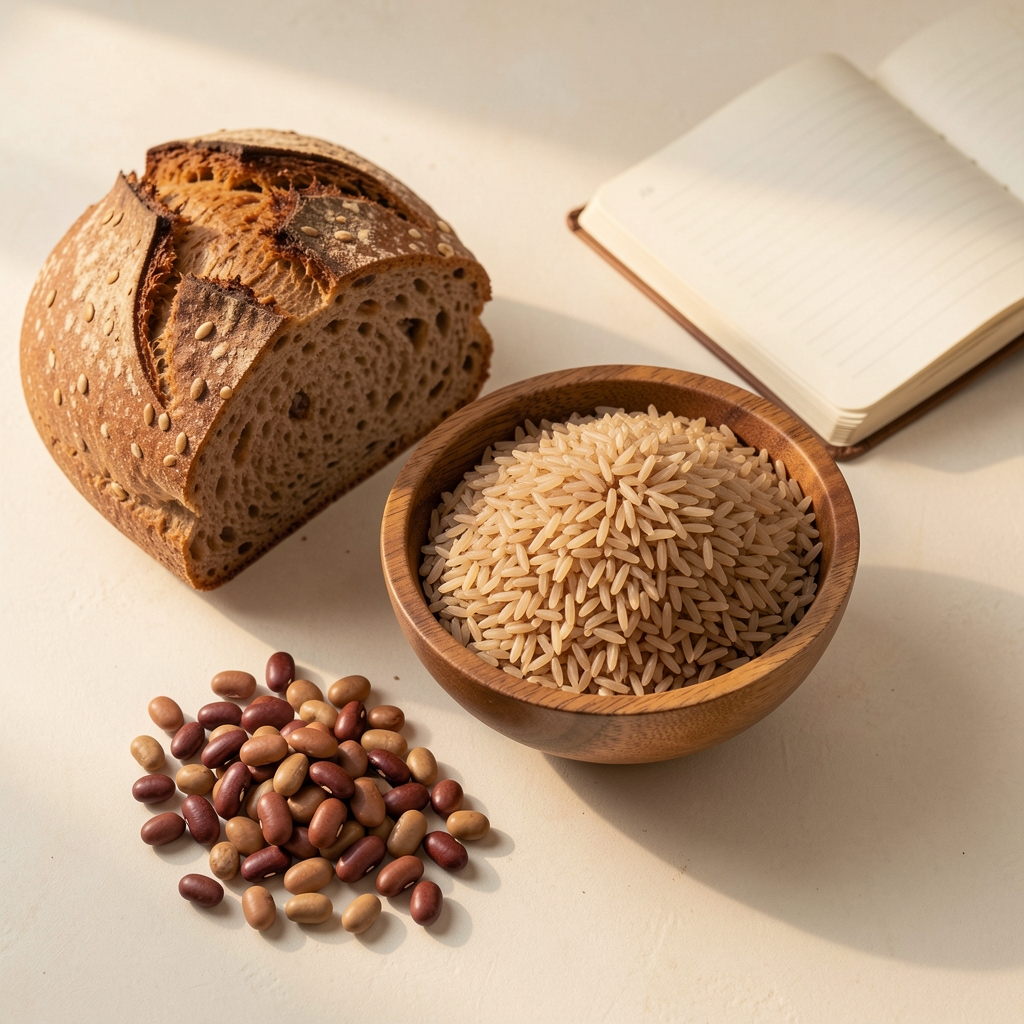
Thiamine is involved in the conversion of carbohydrates into usable energy. Published nutritional research consistently documents its role in metabolic processes related to how the body processes glucose — the primary fuel source for physical activity. Dietary sources include whole grains, legumes, and pork. In the Indonesian food context, where rice is the dominant carbohydrate source, the thiamine content of the grain is relevant: white rice has significantly lower thiamine content than brown or red rice varieties.
This is an observation worth noting for the active Jakarta male population. Several of the subjects in the previous two field records maintained white rice as their primary daily carbohydrate. The supplemental intake of B-complex — whether through a standalone supplement or within a multivitamin — becomes particularly relevant in this dietary context, where the whole-grain thiamine source has been refined out of the diet's staple.
The editorial observation here is not directive: it is not the journal's position to prescribe dietary change. It is, however, an instructive connection between local food patterns and the nutritional landscape within which men's daily supplement choices exist.
B6 is among the most studied of the B-vitamins in the context of daily cognitive and energy patterns. Published research documents its contribution to amino acid processing and its presence in neurotransmitter production pathways. In the editorial wellness context — separate from any specific nutritional claim — B6 contributes to daily energy awareness and focus patterns.
Dietary sources include poultry, fish, potatoes, and bananas. The banana is notable for the Jakarta context: it is ubiquitous, affordable, and culturally embedded in Indonesian daily eating patterns. The nutritional presence of B6 in an everyday food like the banana is a reminder that the supplement landscape exists alongside a rich natural food environment — one that, for many active Indonesian men, already provides a portion of their B-vitamin requirements without supplementation.
The supplement literature around B6 is careful to note that dietary adequacy is achievable through food for most healthy adults maintaining varied nutritional habits. For active men with higher daily output — training, physical work, or extended cognitive demand — the picture is more variable, and the nutritional literature acknowledges this without arriving at prescriptive conclusions about supplementation thresholds.
"The B-complex occupies a peculiar position in the supplement landscape: widely consumed, well-documented in nutritional literature, and yet insufficiently discussed in the editorial context that active men actually encounter daily."Adrian Setiawan — Editorial contributor, Sarolin Letters, March 2026
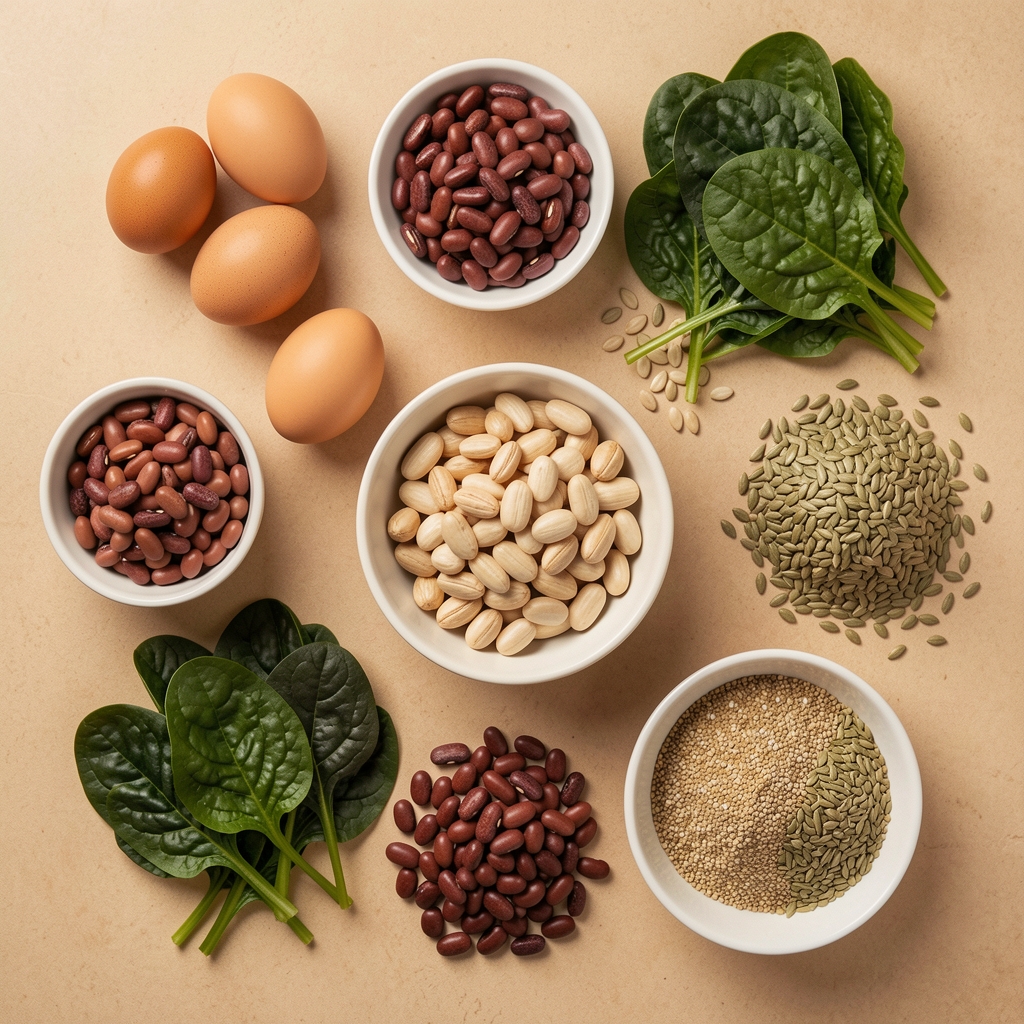
B12 receives more supplement-related attention than any other B-vitamin, in part because its primary food sources are animal products — meat, eggs, dairy, seafood — and its absence from plant-based diets is a well-documented nutritional consideration. In the Jakarta context, where meat consumption is common but dietary variation is broad, the B12 sourcing picture is relatively favourable for most active men observed in this journal's field records.
However, the absorption picture is more complex. Published nutritional research notes that B12 absorption is mediated by a specific process involving the stomach lining, and that this process can vary among individuals — particularly those over forty, for whom absorption patterns may shift. This is relevant to the active male population this journal documents: the older segment of the field-record cohort (early forties) is precisely the demographic where B12 as a standalone supplement consideration becomes more editorially relevant.
Among the six subjects in the February field record, two of the three men over thirty-five included B12 specifically in their supplement awareness — one taking a standalone B12 supplement, the other relying on a multivitamin with notable B12 content. The remaining four did not flag B12 as a specific supplement consideration, though several included it incidentally through a B-complex or multivitamin.
A brief market observation accompanies this editorial review. B-complex supplements are widely available at Jakarta health stores, pharmacies, and increasingly through online channels. The range of formulations is broad: low-dose B-complex for general daily awareness, higher-concentration formulations positioned for active men, and B-complex as a component within broader multivitamin for men formulations.
From a purely editorial standpoint, the formulation variety is notable — but also presents an informational navigation challenge for the active man who has decided to include B-complex in his routine and must now select among competing products. The journal's position is that published nutritional research and editorial review of available literature are the appropriate bases for navigating this choice, alongside the guidance of a qualified nutrition professional for individual circumstances.
We recommend speaking with a qualified health or nutrition professional before introducing any new supplement or dietary change into your daily routine, particularly if you have any existing health considerations.
Published nutritional research supports the contribution of B-vitamins to daily energy awareness and focus patterns in adults maintaining varied nutritional habits. The research does not support the claim that supplementing with B-vitamins above dietary adequacy produces enhanced energy output — a distinction that is editorially important and frequently obscured in the consumer supplement space.
What the research does document is the role of B-vitamins in normal metabolic functioning, and the consequences of inadequate intake on energy awareness. This is a narrower and more precise claim than what supplement marketing often presents — and it is the claim this editorial overview rests on.
For Sarolin Letters, the editorial value of covering B-vitamins lies precisely in this gap between popular supplement framing and published nutritional evidence. The journal's purpose is to occupy the gap editorially — not to amplify marketing claims, and not to dismiss supplement practices that have a rational nutritional basis. The B-complex sits clearly within the second category.
A follow-up review — covering the role of vitamin C and iron in the active men's daily routine — is scheduled for the next issue, to be published in April 2026.
Adrian Setiawan is a Jakarta-based writer covering nutritional awareness, men's wellness editorial, and active lifestyle documentation. He contributes guest review pieces to Sarolin Letters.
Also read: Zinc and Magnesium in the Daily Routine →